



I watched a client buy a cabin in the Smokies for $405,000 and sell it in less than a year for $640,000. For a while, that was normal. Then the whole thing flipped. I specialize in helping investors buy short-term rental property in the Smoky Mountain corridor, Gatlinburg, Pigeon Forge, Sevierville, and Townsend, and this is the wildest market I have seen in my career, both on the way up and on the way down. At Chris Ball Properties, powered by Keller Williams Realty, we are the #7 real estate team in Knoxville by transaction sides per 2025 RealTrends Verified. Here is the real story, no hype: what the boom looked like, what changed, and exactly what to look for in a cabin that actually makes money.
Chris Ball Properties Keller Williams Realty 8550 Kingston Pike, Knoxville, TN 37919 C: (423) 765-5153 | O: (865) 694-5904
What did the Smoky Mountain cabin boom actually look like?
If you were not in it, you will not believe it. Over about five years, the short-term rental market in the Smoky Mountain corridor had a wild ride, and I watched cabins double in value in less than a year. That $405,000 to $640,000 flip was not an exception, it was normal. During COVID, cabins were going up $20,000 or more a month. You could buy land, build a cabin, spend $600,000 all in, and the day it was finished turn around and sell it for $1.2 million. Investment loan rates were in the low threes, which is remarkable for an investment property, let alone a primary home. Buyers were getting a home-run return on their monthly payment ratio, rental numbers were at an all-time high, and sellers, buyers, and agents were all making money. It was by far the most profitable market in all of East Tennessee, and the craziest thing I have seen in my career.Why is the Smoky Mountain rental market so strong in the first place?
This part has not changed, and it is the reason I still believe in the area. Great Smoky Mountains National Park is the most visited national park in America. It beats Yellowstone, and it is not close. Here is what makes it different from almost every other vacation rental market in the country: it really only has about one or two months of true slow season. Most rental markets have a high season and then go quiet. Not here. Every season gives people a different reason to come, and there is something for every age and every kind of traveler all year long. That demand engine is the foundation underneath this entire market, and it is still running. So when I talk about the crash, keep this in your back pocket: the fundamentals of why people come here never broke.What happened when the Smoky Mountain market crashed?
All good things come to an end, and the boom ended too, at least for sellers. This was the hardest-hit market in all of East Tennessee when the shift happened. I do not know a single seller who bought during COVID or after and has sold for a profit since, unless they made significant upgrades. I had a client buy a $1.6 million home and sell it for $1.265 million. I have had deals fall apart because a cabin priced for only a thousand dollars more than the seller paid four years earlier. A thousand dollars in four years. The power has completely flipped to the buyer. Right now it is normal to see a buyer pick up a cabin for a hundred thousand dollars off the asking price, then ask for repairs and closing costs on top, basically writing the rules of the whole transaction. But real estate moves on. Buyers are still buying and sellers are still selling. And you can pretty easily pick up a 10% return on an investment out here, even with property managers charging around 20% to handle your rentals. If you are looking for a 20% return, I will save you time: you will not find it here. A 10% return in a market with this demand engine and this little off-season is a strong, real number. That is getting ahead of the market instead of chasing the fantasy version that is already gone.What should I look for when buying a Smoky Mountain cabin?
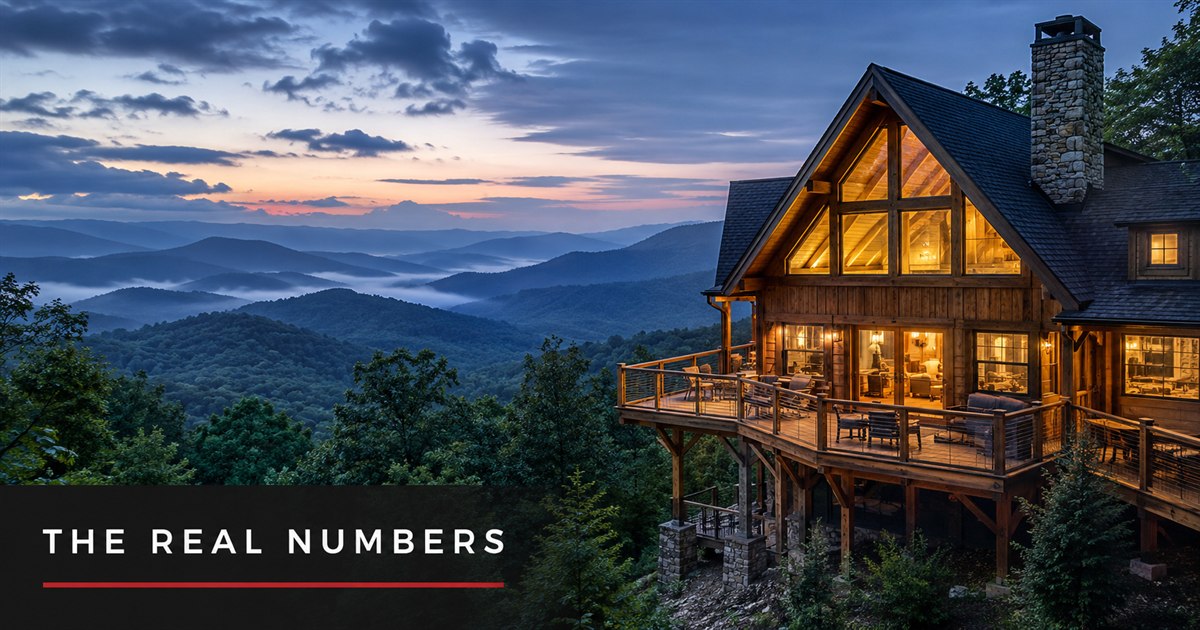
I have watched the trends rise and fall, from hot tubs being the hot new thing to how many people a cabin sleeps, to pools, game rooms, and theaters. Let me cut through it and give you what actually matters, in order. First and most important is a mountain view. An epic mountain view is hands down the single most important thing to look for. A breathtaking view is the crowd-pleaser, and it will always rent. The grander the view, the better, and if you buy out here you must have some kind of mountain view. Second is the numbers, the return, because that is why you are buying in the first place. The realistic target is around 10%, so make the deal pencil on the actual rental math, not the dream version. Third is the style of the cabin, and this trips most people up. Builders have oversaturated the market with build after build, so picking the right one is critical, and the old wood-on-wood-on-wood look does not appeal to renters anymore. What renters want now is a more contemporary stone-and-wood style with high ceilings, big angles, and modern lines. Fourth is amenities, and the rule is simple: the more the better. Game room, theater, hot tub, all of it adds rentability. One real warning on pools: a pool is great unless it is not ventilated well, and then the moisture will destroy your cabin, wreck the renter experience, and eat your profit. If there is a pool, the ventilation has to be right.How do I know if a cabin is a strong enough investment?
Here is the gut-check question I tell every buyer to ask: if the world ended today and only the top 10% of cabins still rented, would the cabin I am buying still rent? That is an extreme example, but the real standard is this: your cabin needs to be in the top 30% of cabins in the market. If it is not, keep looking. I am serious about that. And now the most controversial take, which is about location. In real estate all you hear is location, location, location. In this market that is not true, and I will die on this hill. As long as your cabin is about 30 minutes from everything the area offers, you are good. I do not care if you are in Gatlinburg, Pigeon Forge, or Sevierville, and neither should you. Think about it from the renter's side: they are here on vacation for about a week. One day they are at Dollywood, one day in Gatlinburg at Anakeesta, one day in Pigeon Forge, one day walking in the National Park, and a dozen places in between. They are not glued to one town. A little secret spot is Townsend, known as the quiet side of the Smokies, where you can eat at Peaceful Side Social and tube down the river. So do not get hung up on the exact town. The one place I will tell you to skip is Cosby. No matter where you land, remember the real rule: it must have a mountain view.What is the bottom line on Smoky Mountain cabin investing?
This place is special, and I believe it will always be a great place to own an investment property. You just have to know what you are looking for. The fundamentals never broke: the number one park in America, almost no off-season, and year-round demand. The fantasy pricing of the boom is gone, but a smart, well-chosen cabin with a real view and real numbers is still a strong play. That is being proactive, not reactive. Chris Ball Properties specializes in this market, helping investors buy in the Smoky Mountain corridor the right way. The goal is to help you find a cabin that makes money, not one that just looks good in photos. It is a plan, not luck.Thinking about a Smoky Mountain investment cabin?
If you have questions about the Smoky Mountain short-term rental market or investing anywhere across East Tennessee, reach out to me directly at (423) 765-5153. This is the market I specialize in, and I would love to help you find a cabin that makes money instead of one that just looks good in photos. Let's get ahead of the market together, not chase it.Watch the full video
Chris Ball Properties Keller Williams Realty 8550 Kingston Pike, Knoxville, TN 37919 C: (423) 765-5153 | O: (865) 694-5904
Check out this article next